

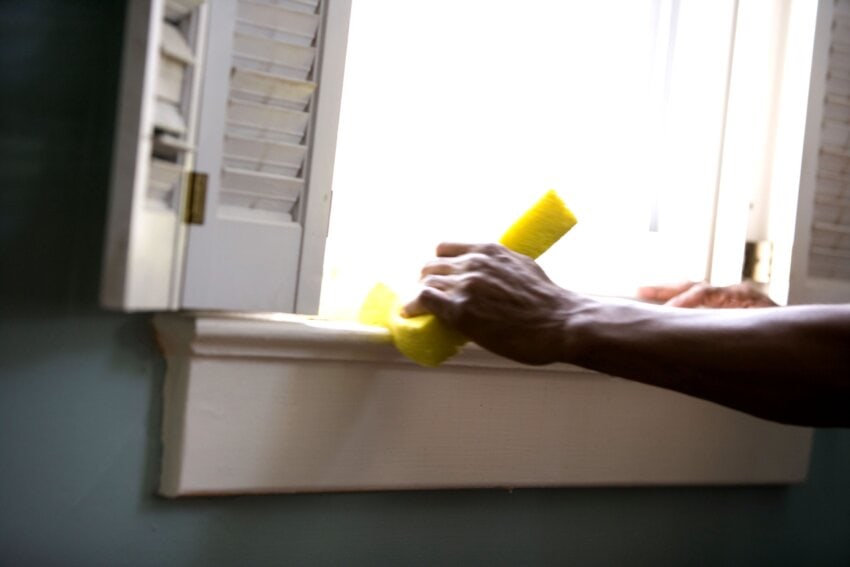

How Often Should You Clean Window Sills?
Window sills are easy to overlook until you open the blinds and find dust, dead insects, or damp patches. Add a quick check to your regular cleaning routine, then adjust how often you clean based on what you actually find.
Start with ordinary dust and dirt
For a dry sill, gently remove loose debris with a soft brush or a vacuum attachment suitable for the finish. Follow the window manufacturer’s instructions for wiping the surface. Avoid soaking wood, pushing water into joints, or using abrasive tools on a delicate finish.
Look at the tracks too, but don’t remove window parts or block drainage openings. If you’re unsure how a window is designed to drain, check its care instructions.
Dampness needs a different response
A sill that repeatedly becomes wet needs more than another wipe. Condensation or a leak may be involved. Cleaning can remove surface dirt; it cannot correct the source of moisture.
If you suspect mold, don’t treat baking soda, vinegar, or a stronger spray as a permanent fix. The EPA explains that moisture control is essential and that moldy porous materials may need replacement. Extensive growth, recurring problems, or water damage deserve assessment beyond routine housekeeping.
Read the EPA’s mold-cleanup guidance before deciding whether a problem is suitable for a small household cleanup. Never mix cleaning chemicals.
What to tell your cleaner
Let us know whether you mean reachable interior sills, tracks, or window glass—those are different tasks. Mention delicate finishes and any dampness before the appointment. We’ll confirm what can be included in your housekeeping visit; routine house cleaning is not mold remediation.